Filip Ivanović, Deputy Prime Minister for Foreign and European Affairs
Between NATO Security and Europe’s Future
At a time of geopolitical upheaval and a changing global order, Montenegro sees its future within the European and Euro-Atlantic space – as a reliable ally, a credible candidate for EU membership, and a country seeking to turn its small size into an advantage through diplomacy, stability, and a clear strategic vision.
The world is entering a period of profound geopolitical change, in which established patterns of international relations are being reassessed and the boundaries between economics, security, and geopolitics are becoming increasingly blurred. For small states, in such an environment, the question of strategic direction is more important than ever.In this interview, we discuss Montenegro’s place in the emerging European and global architecture – from its NATO membership and ambition to become the European Union’s next member, to its potential to transform its geography, energy resources, Adriatic position, and diplomatic network into development and geopolitical advantages. Particular attention is given to reforms, the rule of law, attracting high-quality investment, and the role a small country can play in shaping regional processes.The message of the interview is clear: a country’s size does not necessarily determine its international influence. The credibility of its institutions, the predictability of its policies, the quality of its diplomacy, and its ability to recognise historic moments can become a small country’s most important assets.
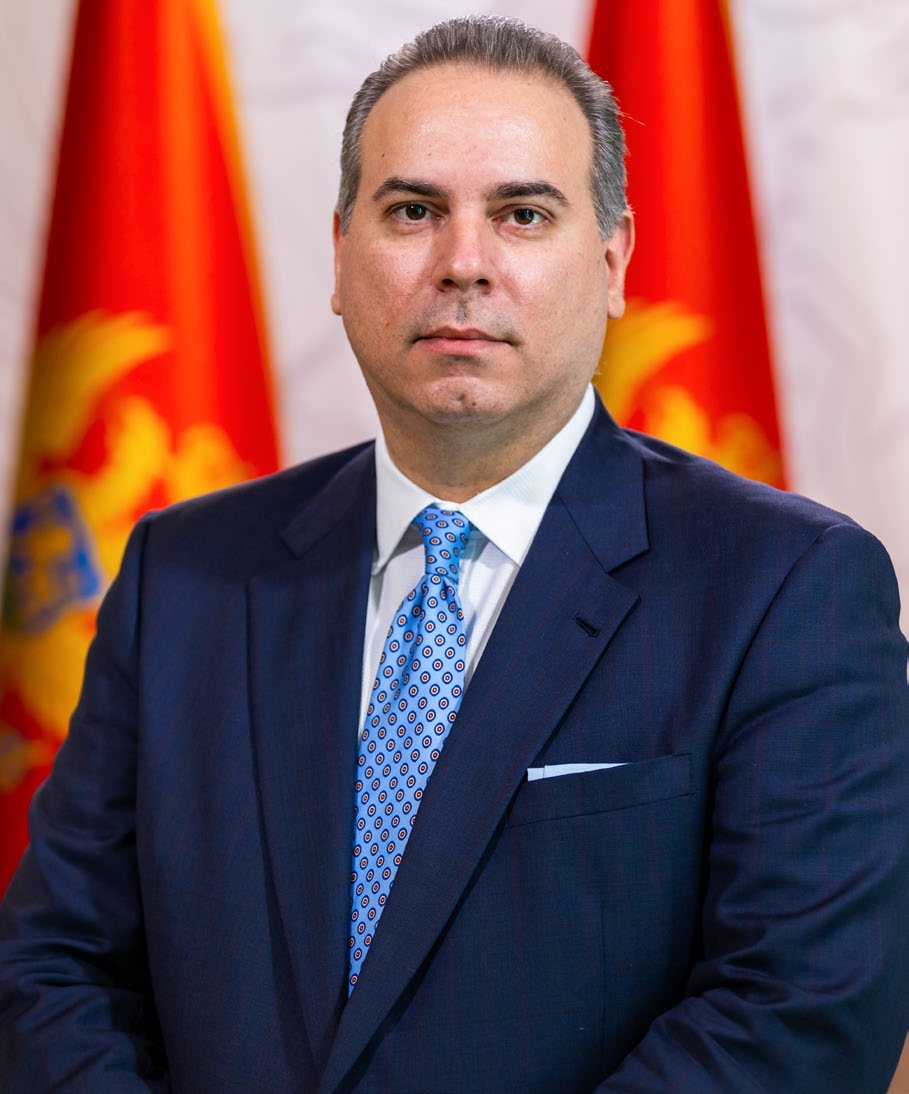
The world is entering a new phase of geopolitical relations. In this context, how do you see Montenegro’s position as a NATO member and a candidate country for membership in the European Union?
The world order is indeed entering a new phase of profound geopolitical upheaval. Perhaps it would be even more accurate to say that we are witnessing an era in which the existing predictable international order is going through an existential crisis, along with the potential redefinition of global spheres of influence. In such a fluid environment, the greatest danger for a small state has never been the modest size of its territory or population, but rather internal indecision, uncertainty about its own direction, and the absence of a firm strategic vision. Montenegro’s foreign policy course is, however, clear and rooted in our fundamental national interests: being a credible member of NATO, and maintaining the undisputed title of the frontrunner in the process of European integration, with the aim of becoming the first next member of the Union. For us, these are not merely administrative labels, empty phrases, or ceremonial foreign-policy priorities; they are civilisational and existential choices that unequivocally reflect the kind of Montenegro we are – a secure, democratically mature, stable, law-governed, and economically prosperous country. In the times of turmoil, membership in NATO provides Montenegro with an indispensable security umbrella and places is within a powerful community of states that share the responsibility for preserving global peace. Particularly today, at a time when the security of Europe and its neighbourhood can no longer be regarded as permanently guaranteed or treated as an abstract administrative concept, this has immeasurable value for a country of this size. On the other hand, the process of European integration extends far beyond the framework of traditional foreign policy or the bureaucratic fulfilment of negotiating chapters.
The European Union represents our most important and fundamental domestic reform project; a civilisational mechanism capable of delivering stronger, more professional, and impartial institutions, the full and uncompromising rule of law, a more competitive market economy, and broad horizons of opportunity for every generation of our citizens. For this reason, Montenegro sees NATO as the firm bulwark of our external security, while the European Union is the foundation of our long-term internal institutional transformation. In a world where the interests of great powers intersect at every turn and challenges spill across national borders, Montenegro cannot afford the luxury of becoming an arena for the competition of others. The national imperative is to be an active subject of our own policies and the master of our own destiny. In practice, this means maintaining an open and principled dialogue with everyone, developing mutually beneficial economic and political relations wherever this clearly serves the interests of our citizens, while at the same time knowing without hesitation upon which values our state is built and to which civilisational community we permanently belong.
A small country neither has to nor should be small in its statesmanship, moral credibility, or vision for development. On the contrary, in times of global uncertainty, a comparative advantage and even a leadership position may belong precisely to those systems that possess a clear idea, credible institutions, and the capacity to be impeccably reliable and predictable partners on the international stage. That is why I view Montenegro’s position today with realistic yet firm optimism: geographically, we may be small, but we are a country with an unmistakable strategic and civilisational choice.
Is membership in the European Union, for Montenegro today, primarily a question of economic development, or is it also a matter of long-term security and strategic orientation?
It would be profoundly mistaken and even dangerous to oversimplify this complex process by reducing it exclusively to its economic dimension and administrative criteria. Certainly, the economic aspect is of exceptional and fundamental importance. For a small, open economy such as ours, access to the European single market, predictable funding structures, and secure investment capital represents a generational development opportunity that must not be missed. However, the European Union today is far more than a traditional economic community or merely a customs and free-trade area. Recent years have demonstrated, in the most dramatic and sobering manner, that the economy, security, and geopolitics have become inseparably intertwined and now function as a single interconnected system. Today, energy policy directly determines a country’s national security; major infrastructure investments carry profound geopolitical consequences; and the protection of critical infrastructure has become a first-order strategic issue upon which the very resilience of the state may depend. Excessive dependence on a single market, a monopolistic supplier of energy resources, or a single external source of financial capital can, in an instant, expose the political sovereignty and freedom of independent decision-making of any sovereign state.
That is precisely why European integration is, for Montenegro, simultaneously a development policy, a security policy, and a supreme state-building and civilisational project. Of course, we sincerely want our citizens to enjoy a better quality of life, better and more highly paid jobs, and a higher standard of living. But in the long term, the essential and immeasurable value of membership lies in permanently belonging to a space defined by legal certainty, institutional predictability, and universal rules of the game. For a small state, such an institutional shield carries immeasurable weight and represents the only true bulwark against the storms of global politics. Thus, the European Union is not merely a pragmatic opportunity for faster economic growth, but the most important state and generational project of modern Montenegro. I am convinced that the EU remains the most advanced community of states in the world, and that being part of it can only be beneficial for Montenegro.
Likewise, our European path is not a path of quietly renouncing our own identity, traditions, and heritage of freedom. On the contrary, it is the only secure way to permanently protect and strengthen that identity, our state sovereignty, and our vital national interests in a world that is becoming increasingly unforgiving and unpredictable. Our future, our peace, and our long-term security lie exclusively within a system that guarantees stability. And Montenegro, once again, knows how to recognise, choose, and consistently pursue the right path for the benefit of all its citizens.
Can Montenegro, as a small country in the Western Balkans, play a greater role in European and regional processes than its size would suggest?
The history of international relations and political doctrine teaches us a fundamental lesson that must never be forgotten in times of global upheaval: a country’s real political weight and geostrategic relevance have never been determined solely by its geographical size, population, or simple GDP statistics. Real and lasting influence on the international stage rests on far deeper and more substantive foundations – on the uncompromising quality of national institutions, the unquestionable credibility of state policy, the visionary ability to recognise a historic moment with precision, and, above all, the courage to assume responsibility when it is most needed. By its very nature, a small state cannot and should not aspire to become a global military or economic power. But it can be great in the way it understands, defines, and consistently fulfils its historical role. Montenegro possesses unique and specific comparative advantages. We are sufficiently institutionally compact and flexible to adapt rapidly and effectively to contemporary global developments; sufficiently open to continuously build bridges of cooperation where others see unbridgeable divides; and sufficiently deeply rooted in the complex realities of our region to understand all of its specific characteristics in their full complexity.
For decades, indeed for centuries, the Western Balkans has spent its invaluable energy replaying the past, clashing over competing narratives, and repeating historical mistakes. My conviction is that Montenegro has both a historic opportunity and a duty to demonstrate its value precisely by using its own example, mature diplomacy, and clear positions to persistently and resolutely shift the focus of the entire regional dialogue from inherited traumas toward a shared European future. We do not have to, nor can we always be, the largest or the loudest voice at the international negotiating table. But we possess every prerequisite to become those whose voice is heard with the greatest respect; a voice that is the most rational, the most stable, and whose proposed solutions are the clearest and most forward-looking. International trust and influential diplomacy, however, are neither bestowed as gifts nor guaranteed by geographical location. They are painstakingly earned and preserved solely through consistency.
If you want to be taken seriously and treated as an equal interlocutor, you must be entirely predictable in your principles, firm in the international commitments you have undertaken, and prepared to shoulder the burden of state responsibility even when doing so requires short-term political sacrifices at home. Credibility is the supreme and irreplaceable capital of a small state. Great powers in the geopolitical game of chess can sometimes afford the luxury of ambiguity or political calculation because their raw power fills the vacuum that may result. Small states cannot afford such mistakes. That is why Montenegro must compensate for its physical size through the highest quality of diplomacy, the professionalism of its institutions, and the intellectual strength of the ideas it offers to its international partners. Montenegro can thus be a steadfast anchor of stability, a country that is opening the door wide to a new era of regional reconciliation, understanding, and economic prosperity, as well as the most successful example of the EU enlargement in more than a decade.
At a time of increasingly intense rivalry among major powers, how much room does a small state have to pursue an independent and pragmatic foreign and economic policy?
In today’s interdependent world, no state exists in a political or economic vacuum, nor is there an absolute sovereignty or independence. That said, independence and sovereignty do not mean retreating behind a state’s borders, but possessing the capacity and freedom to define own national priorities and ensuring that every state decision arises exclusively from the protection of Montenegro’s vital interests. At the same time, in conducting modern state policy, we must make a sharp and clear distinction: pragmatism without firm principles inevitably degenerates into ordinary political opportunism – one that extinguishes today’s fire while setting the foundations of the house ablaze tomorrow. Conversely, rigid principles entirely devoid of political flexibility, tact, and realpolitik are condemned to remain nothing more than empty and unusable rhetoric. A serious and responsible state must possess both within its political arsenal: firm, unquestionable, and civilisationally defined values, as well as a high degree of pragmatic ability to implement those values in the most effective way at a given historical moment. Montenegro must remain fully open to the global market, attractive to high-quality investment, and receptive to new partnerships.
Modern sovereignty has long ceased to be measured solely by formal markers at state borders or by the mere existence of voting rights on paper. It is measured by economic robustness, energy independence, technological stability, and firm control over national resources. The more reliable and credible partnerships we have around the world, and the more successfully we diversify our economic and political directions, the greater our genuine freedom of choice and room for manoeuvre. Montenegro’s true and substantive independence has never consisted in attempting to become a solitary warrior in a harsh world. It lies in cooperating with all those who respect our integrity while always retaining, without exception, the final, decisive, and sovereign word over our own affairs.
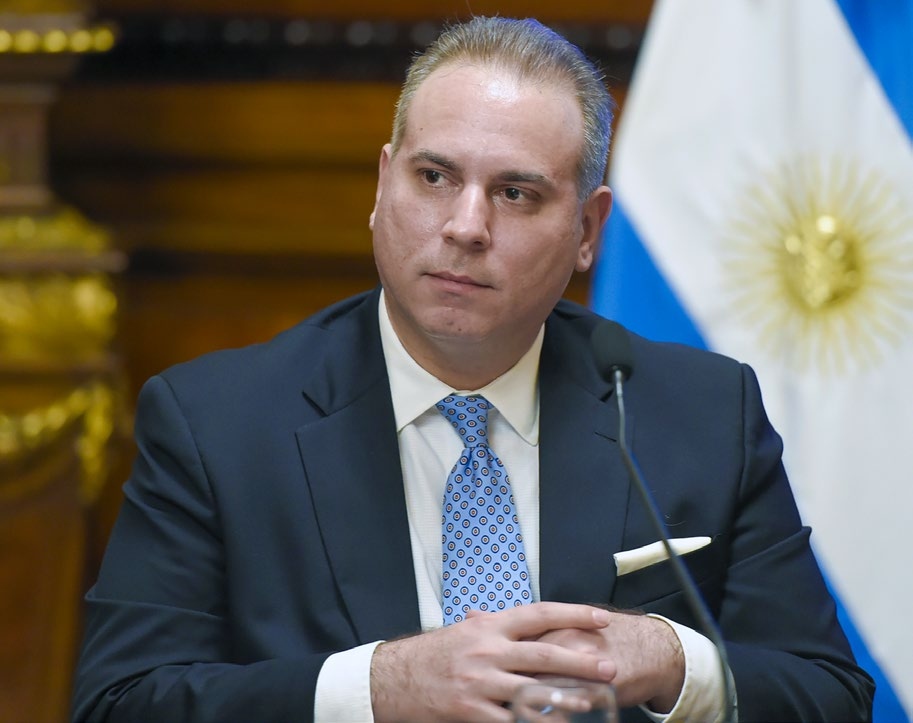
Montenegro wants to be among the first next members of the EU. What is the greatest obstacle on that path today domestic reforms or the dynamics within the European Union itself?
Actually, Montenegro wants to be the first next member of the EU. In relation to your question, if we want a candid, urgent, and uncompromising truth rather than diplomatic courtesy, the answer is that both factors are decisive and inseparably connected. However, our domestic share of responsibility is always the dominant one. The European Union is currently going through the most sensitive and complex period in its history since its founding. It is confronted with security issues, fierce global economic competition, and the urgent need to fundamentally redefine its own internal mechanisms of functioning and decision-making. For this reason, enlargement policy is no longer merely an ordinary administrative and technical process of fulfilling bureaucratic requirements. It has become a crucial strategic issue of geopolitical vision and of the Union’s own capacity for self-preservation. We rightly expect Brussels to recognise the historic moment, properly assess the progress achieved, and ensure that the strict principle of merit remains the sole and unquestionable compass of enlargement policy. However, seeking a permanent alibi in the internal problems, enlargement fatigue, or slowness of the European Union represents the most dangerous intellectual and political trap into which Montenegro could fall. The truth, however, is entirely different: we cannot control the dynamics within the EU institutions. But we can, we must, and we know how to manage our own domestic reforms here in Podgorica. We are not cleansing our judiciary of corruption, strengthening our fundamental institutions, and establishing the rule of law in its full capacity because these requirements appear in Brussels reports or because the European Commission dictates them as conditions for negotiating chapters. We are doing so because we historically owe it to our citizens, our economy, and our children. We do it so that every entrepreneur and business owner knows that they operate within a fair and secure system; so that young and talented people can see their prospects and future in their own country; and so that the institutions of the state become incomparably stronger, more resilient, and more important than any individual holding political power. Montenegro must be fully prepared internally stable, governed by the rule of law, and economically strong, in order to step onto the great stage of a united Europe as an equal, dignified, and successful member. On the other side, the EU needs to fairly and righteously recognize this advancement, and bring Montenegro into its community without further delays or setbacks.
How can Montenegro make use of its geographical position, the Adriatic Sea, and its tourism and energy potential to strengthen its international and economic positioning?
Geography has undoubtedly dealt us an exceptional hand on the geopolitical and economic map. But geography alone has never, at any point in history, been an economic strategy or a guarantee of success. Montenegro must finally move beyond the outdated model in which it exists primarily as a seasonal tourist destination, narrowly dependent on a few summer months and vulnerable to adverse external shocks. Our national ambition must be directed towards year-round, high-value economic activity in which tourism is inseparably integrated with domestic agriculture, modern digital technologies, and health and conference services of the highest standard. At the same time, in an era in which energy security and the green transition represent an absolutely critical geostrategic currency for Europe as a whole, our impressive potential in renewable energy abundant sunshine, wind, and clean water provides us with a historic opportunity to develop into a serious and respected regional energy player. Connecting the north and south of the country through sustainable and modern infrastructure projects, as well as creating and strengthening a green energy corridor towards Italy and the rest of the European Union, are indispensable pillars of Montenegro’s new economic architecture. Nevertheless, none of these natural resources and strategic potentials will produce the desired long-term results without the most important and decisive element: a radical and fundamental improvement in the rule of law and complete institutional efficiency. A serious and credible foreign investor does not need only a sunny Adriatic coastline or an attractive natural resource. Investment requires absolute legal certainty, a fully predictable tax and regulatory framework, an efficient and incorrupt administration, and a stable state in which the rules of the game do not depend on daily political changes. When we combine our natural advantages and geostrategic position with strong institutions, Montenegro will finally cease to be merely a beautiful postcard on the map of Europe and become an economically and strategically indispensable partner. Our ability to manage our own resources wisely, with vision, and with the responsibility of a good steward will be the absolute key to our lasting success in the years ahead.
Does the changing global economic order create new opportunities for Montenegro, and where do you see the greatest potential for attracting strategic investment?
Profound global economic disruptions, tectonic changes, and the fundamental restructuring of global supply chains are creating enormous pressures. At the same time, however, they are opening historic windows of opportunity for those countries that know clearly what they want and where they are going. In the new and fluid global order, international capital is no longer searching exclusively for the cheapest labour or rapid profits. Above all, it seeks stability, reliable alliances, regulatory predictability, and complete political security.For Montenegro, this means an uncompromising and fundamental shift away from the quantity of investment towards the highest possible quality of investment. Speculative capital and investments that leave devastation behind, exhaust national resources, and then depart have never been and must never become our objective.Our strategic focus must be on major, sustainable investments that fundamentally transform the structure, resilience, and overall character of the Montenegrin economy. In this regard, we see the greatest potential in the field of green energy, the comprehensive modernisation of transport, port, and logistics infrastructure, and the accelerated development of the digital economy, new technologies, and innovation; sectors that neither recognise nor are constrained by the geographical limitations of small territories. In all of this, our diplomatic network and missions abroad must be given a new, strong, and measurable economic mission. Our embassies and diplomatic corps must become the first point of contact, a reliable link, and a secure gateway through which serious, highly credible, and transparent investors enter the Montenegrin system.In that sense, let me just mention a few events happening in Montenegro in 2026 – the EU-WB Summit, held in Tivat in June, a series of meetings under Montenegro’s chairing of the Berlin Process, Investment Conference in October 2026, Europe-Asia Interregional High Level Tourism Forum, as well as Montenegro’s chairing of the Council of Europe from November 2026 to May 2027. All these are extremely important political events, but are also excellent opportunities to raise Montenegro’s international visibility and attract significant foreign investments, as well as to build new partnerships. Thus, Montenegro is building the image of a modern state – one that openly and confidently welcomes partners who share our values and are prepared to contribute to a clear vision of development.
Looking ahead over the next ten years, what kind of Montenegro would you like to see in the new Europe and what role can our country play in shaping the future of the region?
When I look ten years ahead, I want to see a Montenegro that has completed its long period of political and social transition and has become an orderly, self-confident, and successful European state. A country that has earned its place in the European Union not as a privilege, but as confirmation of its own ability to meet the highest standards of democracy, the rule of law, and institutional responsibility. But European Union membership must not, in itself, be the end of our journey. It should mark the beginning of a more demanding chapter; a moment when we stop trying to prove ourselves to others and begin demanding more from ourselves. The most important question will not be what we have gained by joining the European Union, but what we have become as a society.
I want to see a Montenegro in which young people have a genuine reason to stay not because leaving is impossible, but because they see opportunities for education, professional development, and a dignified life in their own country. A society in which success is not the result of personal connections, affiliation, or political proximity, but of knowledge, ability, and hard work. I envision an economy capable of creating new value rather than merely relying on what nature has already provided. A country that uses its tourism, energy, natural resources, and geographical position wisely, while simultaneously investing in technology, innovation, education, and the industries of the future. The country’s long-term security will depend not only on what we possess, but also on our ability to transform knowledge into development.
Above all, I want Montenegro to become a society in which institutions inspire trust. A state is truly strong when its citizens know that the law applies equally to everyone, that justice is not selective, and that a change of government does not mean a change in the rules. This is the level of political and social maturity to which we must aspire. When it comes to the region, I do not believe that Montenegro should measure its ambitions by the size of its territory or the number of its inhabitants. Our ambition should be measured by the quality of what we are able to offer. In a region burdened by different historical experiences, unresolved issues, and frequent political tensions, the value of a country that is stable, predictable, and capable of dialogue can be far greater than its physical size might suggest.
That is why I see Montenegro as a place of dialogue rather than conflict; as a country that understands the region but is not trapped by its old patterns. Our advantage may lie precisely in demonstrating that a European future is not an abstract political slogan, but a concrete model of society founded on responsibility, cooperation, and mutual respect. If we have the strength not to pass our own divisions on to future generations, Montenegro can become an example that politics does not have to be based on the constant search for enemies. I believe that the next decade will be decisive, not because history itself will simply offer us an opportunity, but because we will, perhaps for the first time, have the responsibility to demonstrate what we are capable of doing with that opportunity. Montenegro cannot change its geography, nor can or should it erase its past. But it can change the way it governs itself and the way it shapes its future.
If we succeed, ten years from now we will not speak merely of a Montenegro that has become a member of the European Union. We will speak of a Montenegro that has become a country where people want to live, work, create, and raise their children, and as a country the future of which will be determined by what we ourselves are prepared to do for our own future.