The hardest miles ahead
Von der Leyen signals Brussels’ readiness, but warns that political stability and reform are crucial in the final stretch
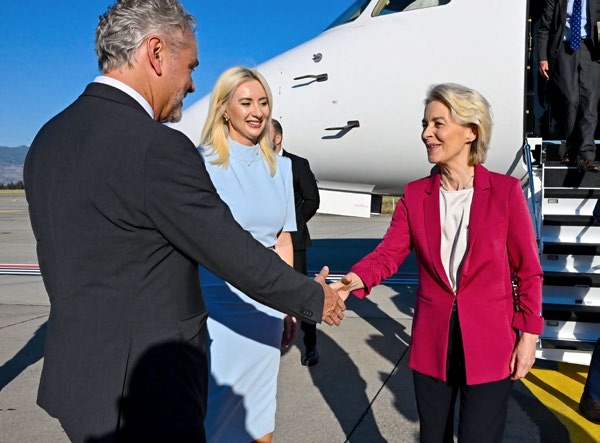
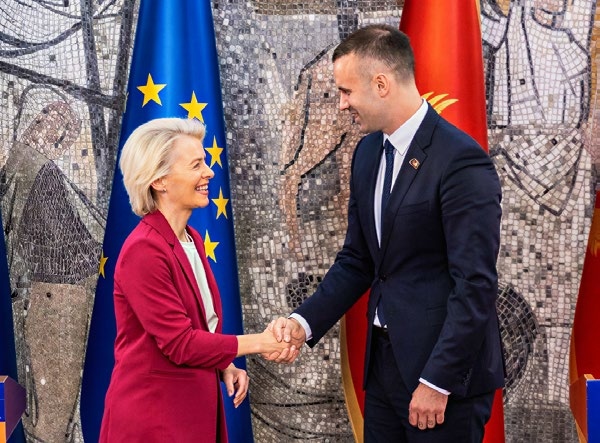
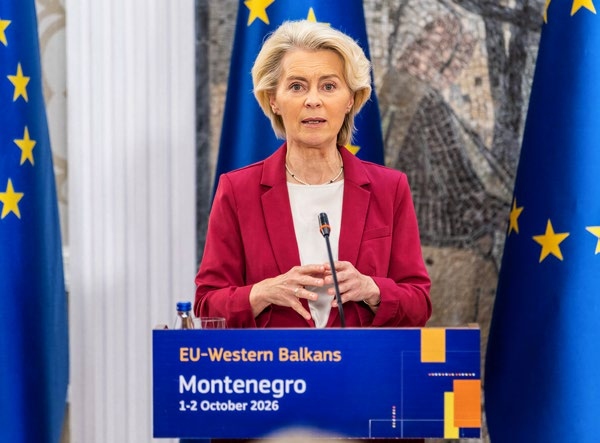
Ursula von der Leyen’s visit to Montenegro confirmed that Podgorica is entering one of the most important phases of its European integration. Alongside praise for reform progress, particularly on the rule of law, Brussels delivered a clear message: the European Union is counting on Montenegro as its 28th member state, but the closing stage of negotiations will require political stability and strong support for the country’s European course. As part of a tour of the Western Balkans, the European Commission President held a series of meetings with Montenegro’s most senior officials. Speaking about the country’s European path, she said that progress on reform had opened the way to the final phase of accession negotiations.
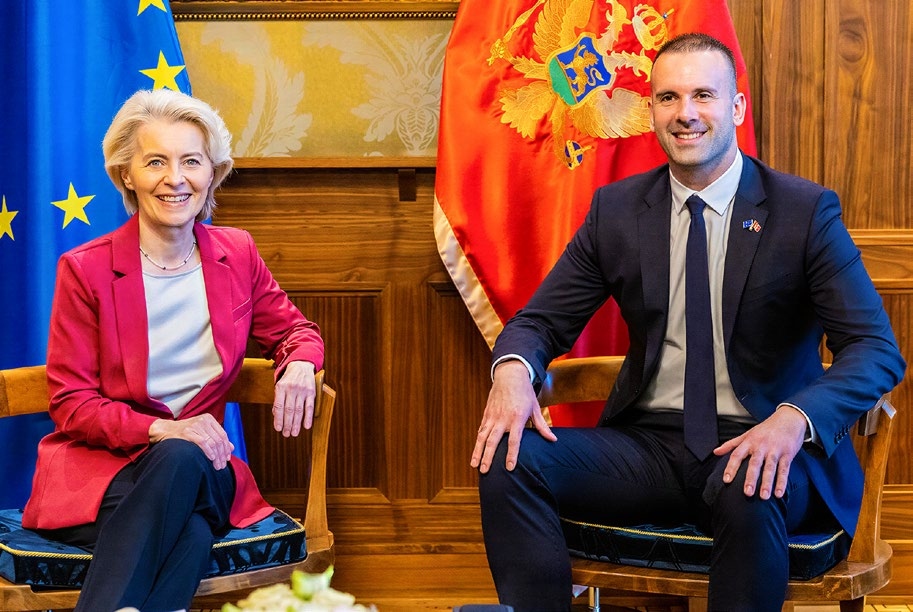
“And this has paved the way for the final stretch. We are working now to close all remaining chapters by the end of this year,” von der Leyen said. The last kilometres of a marathon, she added, are always the hardest, which is why this stage “will require continued political stability and broad cross-party support”.
In the closing stage of the process, she said, Montenegro must keep strengthening its relations with EU member states and remain resilient to attempts to polarise society. She singled out Montenegro’s record under the Growth Plan for the Western Balkans: with more than 90 per cent of the required reforms delivered, the country leads the region.
“You are getting ready. And so are we. Because enlargement is a two-way process,” the Commission President said, announcing that Brussels would present its pre-enlargement policy reviews and assess what needs to be done for the European Union to be ready to welcome new members. Von der Leyen stressed that accession is based on merit, but that the process must not be needlessly slow. She also announced roadmaps for the most advanced candidates, including Montenegro, setting out what each country must do and by when.
Asked about possible mechanisms to protect the interests of member states and about the right of veto, she said these questions were still under discussion, which was why she could not give more detail. She recalled, however, that similar safeguards had existed in earlier EU treaties.
FINAL STRETCH DEMANDS POLITICAL STABILITY
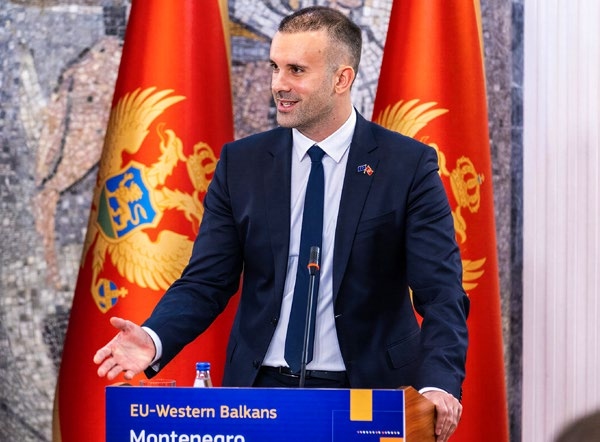
Prime Minister Milojko Spajić said Montenegro was on the last stretch of its road to the European Union and that the government had no intention of easing off in the final phase.
“These few miles are a challenge, but we are ready for the challenge. We have sent most of the chapters to the European Commission. We are ready for assessments, we are ready for criticism,” Spajić said.
Political stability was one of the central themes of the talks. Asked whether the current political crisis could jeopardise the plan to close all negotiating chapters by the end of the year, von der Leyen repeated that broad support from all political parties was essential and that political actors must stay focused on the European path.
The message from Brussels was therefore both encouraging and cautionary: the EU’s door is open, but the endgame demands political responsibility, institutional stability and the ability of the state to see reforms through.
MILATOVIĆ: CLOSING CHAPTERS IS NOT ENOUGH
During the visit, von der Leyen also met President Jakov Milatović. A statement issued after the meeting stressed that Montenegro must prepare not only to complete accession negotiations but also to function as a member of the European Union from day one. Milatović said the state had to work in parallel to close negotiating chapters and prepare its institutions for the obligations membership will bring. The goal, he said, must be not merely the formal closure of chapters but the country’s real readiness to function as an EU member state.
That message carries extra weight at a time when enlargement is increasingly judged by the institutional capacity of future members, and not only by whether they meet formal criteria.
MONTENEGRO’S BORDERS AS THE EU’S FUTURE BORDERS
One of the most symbolically important moments of the visit was the opening of the Border Police’s new National Coordination Centre in Podgorica. Von der Leyen said the centre was an important step on Montenegro’s European path and part of the preparation for the moment when its borders become the EU’s external borders. “The inauguration of the new National Coordination Centre is truly a milestone towards your EU future,” von der Leyen said, adding that the European Union was already preparing for Montenegro’s membership. “We are preparing for Montenegro’s borders to become European Union borders,” the Commission President said.
Prime Minister Spajić also marked the opening, saying that Montenegro was continuing to advance on its European path. “On the road to the EU, always a step forward,” Spajić wrote, noting that the new National Coordination Centre further strengthens the protection of the country’s borders and prepares Montenegro for its future role as a guardian of the EU’s external border.
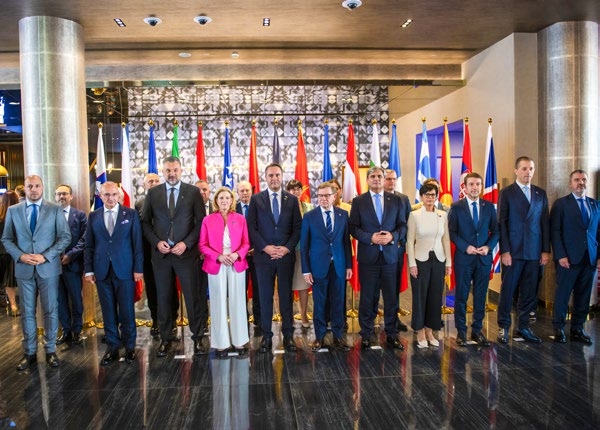
Von der Leyen’s visit coincided with a stay in Montenegro by the European Commissioner for Enlargement, Marta Kos, who attended the Berlin Process meeting of foreign ministers in Pržno, near Budva.
For Podgorica, the message from these meetings was clear: in Brussels’ assessment, Montenegro is the most advanced candidate in the region and is approaching the end of the negotiating process. The last leg of the European marathon could, however, also prove the most demanding, not only because of the reforms still to be carried out, but because the political system must hold on to its stability and a shared strategic direction.
If Montenegro keeps up its pace of reform and its political focus, membership by 2028 no longer looks like a distant European prospect. It looks like a concrete political and institutional task that is entering its final phase.