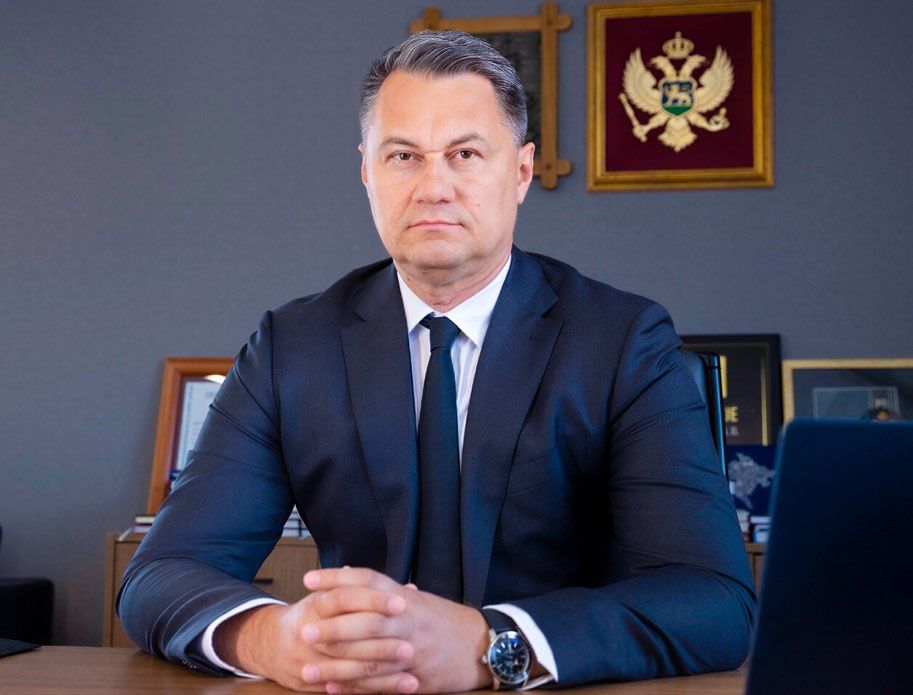
Nemanja Laković, CEO of the Pljevlja Coal Mine
As Montenegro’s energy sector evolves, the Pljevlja Coal Mine is pursuing a transformation that combines energy security, renewable development, new industries, and long-term opportunities for workers and the local community.
For the Pljevlja Coal Mine, the energy transition does not mean the end, but the start of a new business cycle. As Europe’s energy landscape changes fast, the company is trying to combine a secure coal supply with the development of renewables, new business models, and job preservation.
RUP’s chief executive, Nemanja Laković, talks about the company’s future, modernisation, a just transition, and plans to position Pljevlja as Montenegro’s new energy and industrial centre. His message is clear: the aim is not to shut down one system, but to turn existing knowledge, infrastructure, and human capital into new economic value.
How do you see the future of the coal mine over the next five to ten years?
I see the future of the Pljevlja Coal Mine (RUP) in the transformation of the company that we have already begun, not in its closure, because the mine must remain one of the pillars of Montenegro’s energy and economic stability. Our goal is clear: to build a mine that is ready for the changes the energy transition brings, while keeping its core business, which is the reliable supply of domestic coal to the Pljevlja Thermal Power Plant (TPP Pljevlja) for as long as Montenegro’s power system needs it. Let me remind you that in June, July and August the coal mine and TPP Pljevlja system accounted for 64.8 per cent of EPCG’s total electricity output, which is more than €51 million worth of electricity. In Montenegro’s overall generation portfolio, the Pljevlja complex accounts for between 40 and 60 per cent, and that tells you what a secure supply and the continued operation of TPP Pljevlja and the coal mine really mean. So our goal is for the mine to become a modern, technologically advanced and diversified company over the next five to ten years. That means investing in the core business, but also managing the transformation responsibly by developing new business models: renewable energy, using existing infrastructure for new projects, building related production activities and creating new sources of revenue. The company’s management sees the transition not as a question of closing down one business system, but as a question of how to turn existing knowledge, infrastructure, land and human resources into new economic value.
Can coal still guarantee energy security during the green transition?
During the transition, coal must continue to play an important role in the stability of Montenegro’s power system. Exiting coal, in other words, fully completing the just transition, will only be possible once we find a stable energy alternative for the 220 megawatts generated by TPP Pljevlja. In the last five years alone, this system has produced more than €800 million worth of electricity at market prices. The energy transition cannot simply be a matter of switching from one energy source to another. It must protect jobs and social security while safeguarding security of supply, system stability, and economic competitiveness. The coal mine and TPP Pljevlja form a single energy and production chain. Our responsibility is to keep that chain reliable and efficient while developing new energy sources alongside it. At the same time, we have to be aware of the direction European energy policy is taking. That is why we do not see the future in relying solely on coal, but in using the time we have for a planned and responsible transformation. That transformation can and must be an opportunity for Pljevlja to remain an important energy and economic centre of Montenegro, and for the coal mine and TPP Pljevlja, through a carefully considered transition, to keep contributing to security of supply, employment and the country’s development.
What are the biggest challenges the mine faces today?
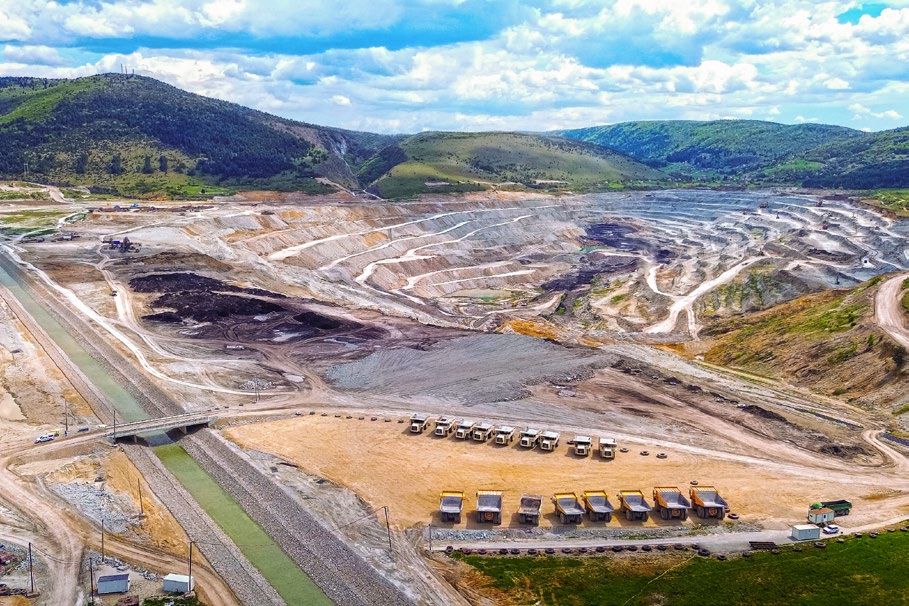
The biggest challenge is achieving three goals at once: maintaining production continuity, improving economic efficiency, and preparing the company for the future. The mine also faces challenges in modernising machinery, worker safety, cost management, access to finance, and increasingly demanding environmental standards. Yet these challenges also create room for development. We mustn’t look at the coal mine in isolation. Its future depends on Montenegro’s wider energy system: on the development of TPP Pljevlja, national energy policy, European standards and the availability of investment capital. That is why we value cooperation with national and local institutions at home, as well as with international partners. The aim is to have as many concrete, ready-togo projects as possible, not only for RUP but for development and new investment in the town itself. That is also why I pushed for EU funds to be opened up during the pre-accession negotiations, and for the projects relating to Pljevlja to be firmed up and completed.
How crucial is investment in modernisation and safety to the mine’s survival?
Investment is a precondition for long-term sustainability. Modern mining can no longer rest on a model built only on increasing output. We must raise productivity, safety, technological efficiency, and environmental standards. Modernising mining machinery is a question in its own right. Our talks and cooperation with international equipment manufacturers are opening the way to modern electric and hybrid technologies, which matters for both safety and reducing environmental impact. We are already well advanced on this, with the electrification of excavators, the replacement of old and wornout equipment, and investment in real business initiatives that we are pursuing both within the company and in the town. Every investment has to make clear economic sense. Our aim is not to invest for the sake of investing, but to create long-term value for the company, Pljevlja, and the northern region.
How do you reconcile the need to protect jobs with ever stricter environmental standards?
That is one of the key questions of a just transition. For us, a just transition is not only about closing existing jobs, but about creating new business activities and new opportunities for employees. As is well known, the RUP and TPP Pljevlja system accounts for around 3,000 jobs in Pljevlja, directly and indirectly. At the same time, the Just Transition Plan, through the Business Transformation of RUP, creates room for sustainable development in the local community through green and innovative projects. That is why Montenegro’s key energy companies must be managed seriously, both in how they are run and in how every obligation and project is implemented. The mine has human capital built up over decades. That knowledge must not be lost. Some employees can move into new activities, with additional training and retraining, while new investment will create room for new jobs. That is why we have to look at the economic and the environmental transition together. If we transform the company in a planned and timely way, we can reduce environmental impact and preserve economic activity in Pljevlja at the same time.
Is there a realistic plan for the future of the workforce if the energy transition speeds up?
The future of employees must be a key and integral part of any serious energy transition plan. We cannot talk only about megawatts, investment and financial indicators and ignore the people who have carried this system for decades. Our approach is to give employees a long-term future through new business activities. That includes developing new energy projects, production capacity and services, as well as training programmes for the jobs the new business model will need. Pljevlja has knowledge, an industrial tradition, infrastructure and a workforce. That is a serious development advantage, and it must be part of the future investment model. In short, a just transition is a new chance and a new energy for the town. The coal mine has positioned itself clearly and unequivocally as an active partner in this process, not merely through declarations of support but through concrete and measurable results. The company has launched the Just Transition Plan through Business Transformation, which has created room to add new value, enter the market, and offer new opportunities to many people. The plan covers 14 new businesses, which means 14 new opportunities for our people and their families. It also means 14 new reasons for people to stay in Pljevlja. A just transition aims to leave no one behind.
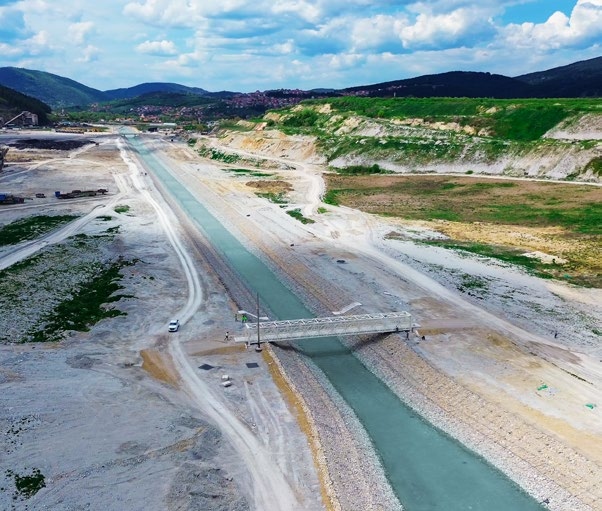
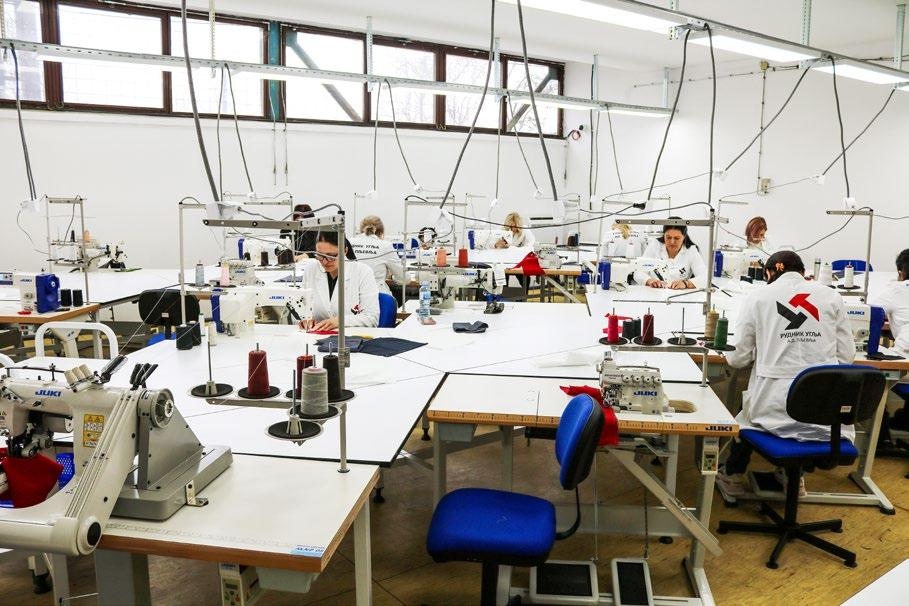
Only a transformation of that kind can be justified and worth pursuing. We have launched solar and hydropower generation projects through the Durutovići small hydropower plant and the Grevo solar power plant, with battery energy storage. Our construction unit is successfully running an energy efficiency programme for individual houses and multi-residential buildings, along with other projects on the market. We are investing in new industry: a plant producing personal protective equipment and an asphalt plant have both been launched. The coal mine has a laboratory, the only one in Montenegro, that tests coal quality using accredited methods. New technology, electric and hybrid mining machinery, automation, the digitalisation of production, lower fuel and energy consumption, and land reclamation are among the other priorities the company’s management is pursuing. I would like to single out one more important project we plan to launch in the period ahead: a wood-processing industry in Pljevlja. Given that 60 per cent of Montenegro’s forests lie within the municipality of Pljevlja, it is clear what kind of resource we are dealing with, and it has gone untapped for years. All of this amounts to a realistic plan and a development opportunity for our town, one that will help offset natural population decline and allow people to stay and live in Pljevlja and the northern region.
How important is the mine for the development of the local community and the wider economy?
The mine is much more than a coal company. It is a key part of the economic system of Pljevlja and northern Montenegro. Around the mine there is a whole chain of suppliers, services, transport, maintenance, construction and other activities. That is why every change to the mine’s business model has a wider economic effect. Our goal is to make that effect even greater in the future. We pay particular attention to using existing capacity for new business activities. Pljevlja has the potential to grow from a traditional mining centre into a regional centre for new energy and industrial projects. A key role in transforming our municipality into a modern European community belongs to the Pljevlja Recovery Plan, launched at the initiative of the Pljevlja Coal Mine with the support of the Government of Montenegro, with an investment of more than €100 million. The district heating and new modern hospital projects now under way, worth around €60 million, are restoring trust in words such as “plan”, “investment” and “progress”. Projects to build a swimming pool and a multi-purpose hall, along with the expressway between Crnča and Pljevlja, have funds approved for capital projects this year and show the government’s commitment to laying the foundations for stronger infrastructure and economic development. In addition, the Pljevlja Coal Mine will soon start building a residential and commercial complex, primarily for its employees, which will provide decent living conditions and stem the outflow of residents. This shows that we can achieve much in the period ahead if we all believe in it and want to succeed.
Can the existing mining infrastructure be used to develop new energy projects?
Absolutely. That is precisely where we see one of the mine’s greatest development potentials. We have land, energy infrastructure, transport and industrial infrastructure, skilled staff and decades of experience in delivering large industrial projects. All of that can form the basis for developing new energy capacity. One direction, as I mentioned, is developing solar power plants and other renewables, as well as exploring energy storage systems. At the same time, the existing infrastructure can serve as the basis for new manufacturing and processing activities. In this way, the mine can become an example of how industrial infrastructure from one energy cycle can be used as the foundation for a new development cycle.
What does the public most often fail to understand about modern mining?
I think mining is still often seen through the image of the industry as it was several decades ago. Modern mining, however, is a high-tech industry that requires serious planning, modern machinery, geological exploration, digital systems, strict safety and environmental procedures, and the management of large investment projects. The second important point is that the coal mine is not an isolated dot on the map. It is part of a wider energy and economic system. Our task is to show the public that mining can be responsible towards employees, the community and the environment while remaining commercially sustainable. That transformation is the biggest challenge, but also the biggest opportunity.
When you talk about the future of the mine, are you an optimist?
I am, but my optimism is not based on the idea that things will sort themselves out. It rests on the mine’s potential and on the fact that we can actively manage the transformation process. We have an industrial tradition, skilled people, infrastructure and experience in delivering large projects. We also have a clear reason to change: the European energy framework and the need to operate sustainably. I believe that in the period ahead, the Pljevlja Coal Mine can grow from a traditional mining company into a diversified energy and industrial company. Our aim is not only to respond to the changes ahead, but to use them to create new value. If we bring together investment, modern technology, our employees’ knowledge, and international cooperation, Pljevlja can gain a new development outlook, and the mine can remain an important part of that process. We must act as one team and believe in an investment cycle that can only be delivered through joint work and cooperation; every new investment means better living conditions, more opportunities to work, and a stronger future for our town.