Jovanka Višekruna Janković, Pianist
A pianist who has spent more than twenty years building bridges between artists, institutions and audiences across the Balkans and Europe explains why Montenegro has become one of the region’s natural stages
Some people see culture not merely as artistic expression but as a place of encounter, dialogue and connection. Pianist Jovanka Višekruna Janković is one of them. Founder and artistic director of the Belgrade-based ArtLink and founder of the regional chamber orchestra Camerata Balcanica, she holds a Master of Arts, is a Chevalier of France’s Order of Arts and Letters and has been recognised by the Western Balkans Fund for her contribution to regional cooperation. For more than two decades, she has built bridges between artists, institutions, and audiences across the Balkans and Europe.
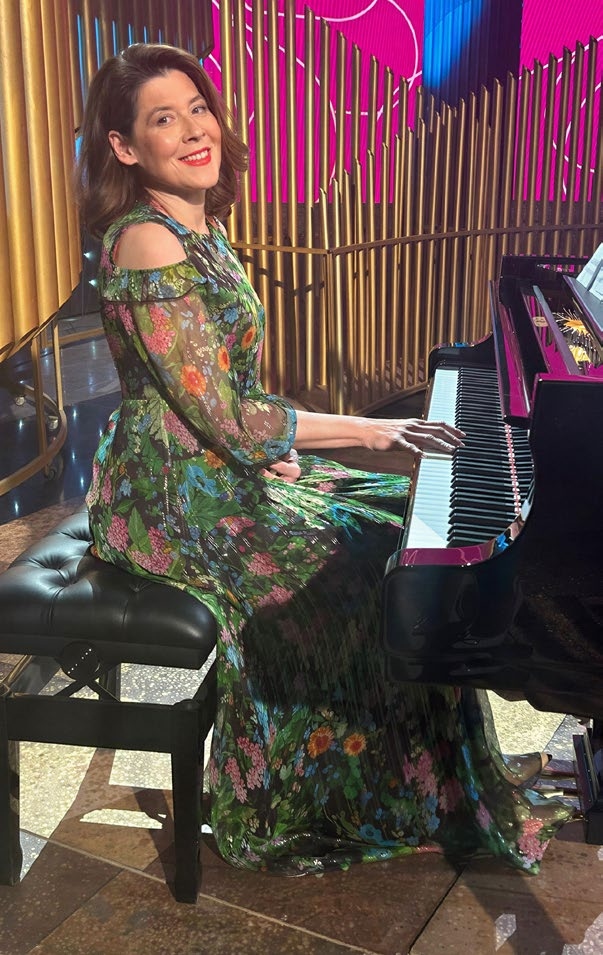
Her story of regional cooperation begins in 2004, when ArtLink was founded as part of the Nordic Balkan Cultural Switch, an interregional project supported by the Nordic Council of Ministers. The idea was simple but ambitious: to restore severed ties and open new space for collaboration between artists from the region and from the Nordic countries.
‘I was very probably among the first to start developing regional cooperation in music systematically,’ Janković recalls.
From that idea came the Nordic Balkan orchestra, which brought together the best young musicians from both regions. At the same time, a residency at one of Canada’s leading international arts centres strengthened her resolve to create new opportunities for artists from the region. That vision later gave rise to Camerata Balcanica. This regional chamber ensemble is today one of the more significant artistic projects devoted to connecting the musicians and cultural spaces of the Balkans.
A NATURAL STAGE FOR THE REGION’S CULTURE
In recent years Montenegro has taken a special place in this regional cultural mosaic. In 2022, the ArtLink Festival staged a regional edition linking eleven venues across the region, aiming to present artistic programmes in settings that preserve cultural heritage and natural beauty alike. In Montenegro, a series of programmes has been staged at striking locations. Camerata Balcanica performed in Prčanj in partnership with the KotorArt festival, joined by a distinguished violinist and concertmaster of the Vienna Philharmonic. The ensemble also appeared at the Ivo Andrić House with the Belgian conductor Benjamin Haemhouts. At the same time, Braziliana Balcanica, produced with the Embassy of Brazil, brought the music of Brazil’s best-known composers to audiences at the Music Centre of Montenegro.
The programmes at Luštica Bay hold a special place, featuring performances by Camerata Balcanica, Italian soloists, and Egyptian pianist Mohamed Shams. Among the most striking events was The Infernal Comedy, with John Malkovich and the Orchester Wiener Akademie, which ArtLink presented at Porto Montenegro. For Janković, though, the concert that carries the most emotion is the one she gave early this year with the Portuguese tenor Carlos Faria Reis in the Church of the Holy Spirit in Kotor. The programme marked 500 years since the birth of Luís de Camões, one of Portugal’s greatest poets, and KotorArt organised it with support from the Camões Institute.
Projects like these show that cultural cooperation need not be confined to concert halls. On the contrary, historic towns, squares, shorelines and landscapes become part of the artistic experience, and culture takes on a new role in presenting the region’s identity.
ART IN THE SERVICE OF SUSTAINABILITY
Janković also sees cultural diplomacy through the lens of social responsibility. In recent years, the ArtLink Festival has paid particular attention to the relationship between art and nature, following the UN’s international initiative Artists for Nature. One project she singles out is Play for Nature, a regional programme run with the Japanese embassies in the region and Mitsubishi, designed to teach children about protecting nature through a creative, interactive approach. For the project, ArtLink devised a board game for children with more than a hundred illustrations, which was also presented through exhibitions in schools across the region. In Montenegro, the project was carried out with the Savo Pejanović Primary School, where a tournament for pupils was held in the presence of the Japanese ambassador and Mitsubishi’s regional director.
‘Culture can be a powerful driver of social change’ is the message that runs through her work. Art steps beyond the stage and becomes a tool for education, connection, and building awareness of shared responsibility.
WOMEN CHANGING THE CULTURAL SCENE
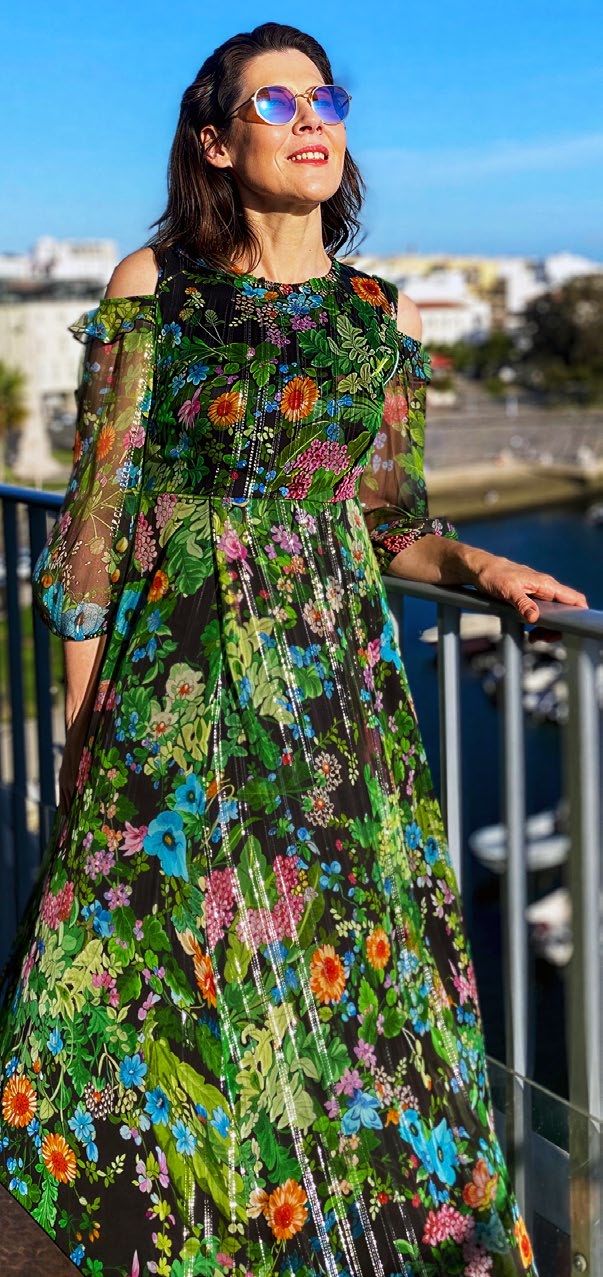
Support for women in the arts is a chapter of its own in her work. From that commitment came the Women ArtLinks Forum, a platform whose programme UNESCO supports and which brings together women artists, cultural managers, founders of institutions, and artistic directors from many countries. Among the women she works with are the poet Maja Herman Sekulić; Kathrin Deventer, Secretary General of the European Festivals Association; the visual artist Lilya Pavlović-Dear; Dee Penicaut; Sona Hovhannisyan; the Portuguese cellist Isabel Vaz; and many others. She also singles out Madlena Zepter, whom she regards as the region’s first woman patron of the arts. For Janković, connecting women in the arts is not only about visibility. It is about building a network of support, sharing experience and creating new projects together.
WHEN ART MEETS BUSINESS
One subject that Janković is increasingly focused on is the relationship between the arts and the business sector. Contemporary culture, she believes, calls for a new model of cooperation in which artists are not merely asking for support but equal partners whose knowledge, creativity, and ideas can contribute to business. ‘Art today is also a business, but a large part of the arts sector is non-profit and struggles to survive without support from the for-profit sector.’
That is why, she argues, the stereotype of the artist who always arrives with a sponsorship request needs to change. Companies should instead recognise artists as creative partners and engage them to develop ideas, visions and strategies.
In that sense, she says, artists are also entrepreneurs: people who must conceive, organise and present their work, find an audience and build a sustainable way of working.
FREEDOM AS THE FOUNDATION OF EXPRESSION
For Janković, art is also a mirror of society.
‘Artists are the most sensitive part of any society, and through their art they reflect the environment they live in.’
That is why the freedom to create and to express oneself is, for her, one of the fundamental principles of art. Music, her own space of expression, allows her to create with artists from different countries something that transcends language, borders and political divides. Over her career, she has performed with many internationally acclaimed artists, including Alban Gerhardt, Jan Vogler, Camerata Janáček, and Igor Lazko. Today she looks forward to new collaborations, including projects with the cellists Isabel Vaz and Lina Leijala and new visits by guest artists to Montenegro. New Camerata Balcanica programmes are in preparation, including the Braziliana programme, alongside projects developed in partnership with Montenegrin institutions and European Union partners.
CULTURE AS A BRIDGE, NOT A BORDER
At a time when political and economic borders are so often the focus, cultural cooperation reminds us that the region has far more in common than divides it. A shared historical heritage, distinct traditions and cultural ties can become the basis for a contemporary dialogue. That is where Janković sees her mission: to connect people, cities and countries through music and art. Her vision of the future is not only regional. It means closer links between artists from the Balkans and their colleagues in the European Union and beyond, new partnerships, and programmes that position culture as an important part of international cooperation.
‘I very much hope we will receive support and recognition for artistic programmes that can unite artists not only from the region but also from the member states of the European Union and beyond.’
Because when art is seen as a place of encounter, cultural cooperation stops being merely a programme. It becomes a diplomacy of people, emotions, and shared heritage.