Tuđemil Battle, 1042 AD
A night of deception and strategy that reshaped the Adriatic balance of power
TUĐEMIL IN FACTS AND FIGURES
October 7 th 1042 – traditionally cited as the date of the Battle of Bar/Tuđemil.
Location: the area of Tuđemil, near Bar, between the coast and Crmnica.
Dukljan side: Prince Stefan Vojislav, founder of the Vojislavljević dynasty.
Byzantine side: forces associated with the Theme of Dyrrhachium, under the command of Michael, the strategos of Dyrrhachium. Duklja’s decisive advantage: knowledge of the terrain, a surprise night attack and military deception.
Historical significance: the victory enabled Vojislav to consolidate Duklja’s independence and lay the foundations for its further political strengthening.
Today: October 7 th is observed in Montenegro as Montenegro Armed Forces Day, in commemoration of this victory.
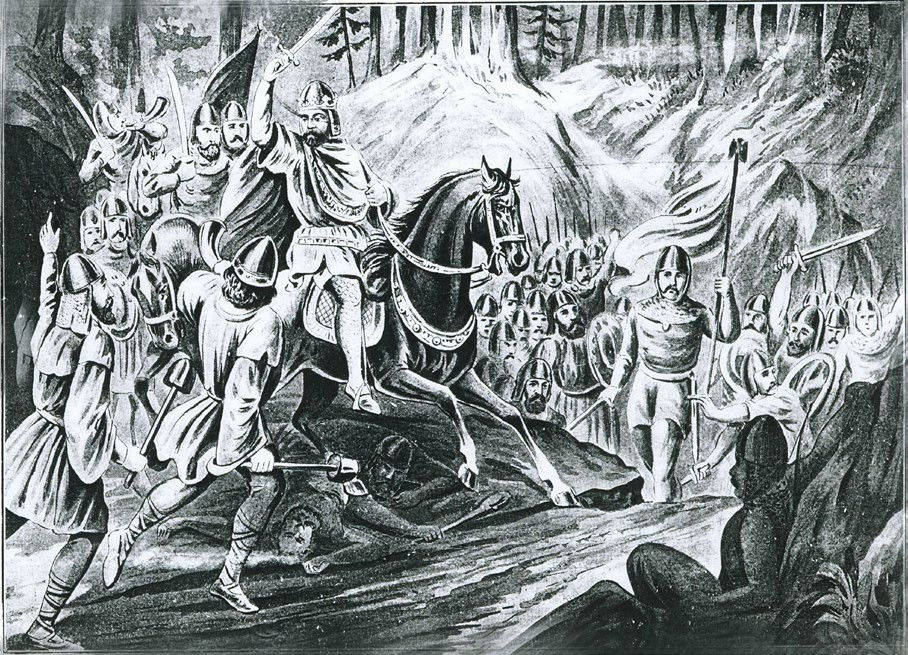
On October 7th 1042, in the hills above Bar, a small principality stunned a great empire. Stefan Vojislav, Prince of Duklja, turned terrain, deception, and timing into weapons, defeating the Byzantine army and reshaping the balance of power in the Adriatic. Tuđemil was not just a battle-it was the moment when a small state proved it could stand independent against imperial might.
WHEN LITTLE DUKLJA OUTWITTED A GREAT EMPIRE
October 7 th 1042 has gone down in history as one of the defining dates in the medieval history of the territory of present-day Montenegro. Near Bar, in the area of Tuđemil, Stefan Vojislav, Prince of Duklja, inflicted a crushing defeat on the Byzantine army that had come to suppress his uprising and re-establish imperial control over Duklja. At first glance, it was merely another battle between a local ruler and a great empire. Its significance, however, was far greater. Stefan Vojislav’s victory demonstrated that Byzantium, despite its immense political, military and economic power, could not simply impose its will on the difficult terrain of Duklja. After Tuđemil, the distribution of power in the southern Adriatic was never the same again.
In the preceding years, Stefan Vojislav had already attempted to free himself from Byzantine suzerainty. After being imprisoned in Constantinople, he managed to escape and return to Duklja, where he renewed the uprising. In 1042, Byzantium decided to resolve the matter by military force. The expedition was led by Michael, the strategos of Dyrrhachium, and forces from the surrounding regions also joined the Byzantine side. Vojislav, however, understood something that a great empire often could not: the advantage does not always lie with the more numerous opponent. Rather than engage in open battle on terrain that favoured the Byzantines, the Prince of Duklja drew his opponent into the mountainous terrain between Bar and Crmnica. According to medieval sources, Vojislav used deception to create the impression among the Byzantines that they were facing a much larger army than was actually the case. The attack was carried out at night from the surrounding hills, depriving the Byzantine army of the opportunity to mount an organised response. It is precisely at this point that Tuđemil ceases to be merely a story of a military confrontation.
IT IS A STORY ABOUT THE STRATEGY OF A SMALL STATE
Duklja could not compete with Byzantium in terms of the size of its army, its resources or its international influence. It could, however, choose the terrain, the timing and the manner of confrontation. Vojislav turned that advantage into political capital. The defeat of the Byzantine army enabled Duklja to consolidate its independence, while Vojislav expanded his influence into the surrounding regions following his victory. His reign laid the foundations for Duklja’s further strengthening under his successor, Mihailo.
Almost a thousand years later, Tuđemil can therefore also be viewed through the lens of modern diplomacy: how far can a small state go when it accurately assesses the interests of the great powers, its own capabilities and the environment in which it operates? This is where its contemporary relevance lies. For the history of international relations is not merely the history of great empires. It is also the history of small political communities that survived thanks to patience, alliances, knowledge of the terrain and the ability to recognise the moment when the balance of power could shift. Tuđemil was precisely such a moment.