A hill of memory, a duty of tomorrow
The 150 th anniversary of the battle was marked by a message that remembering Montenegro’s heroes means more than preserving the past: it is an obligation to defend the state, freedom, and unity today, and the values that will pass to future generations.
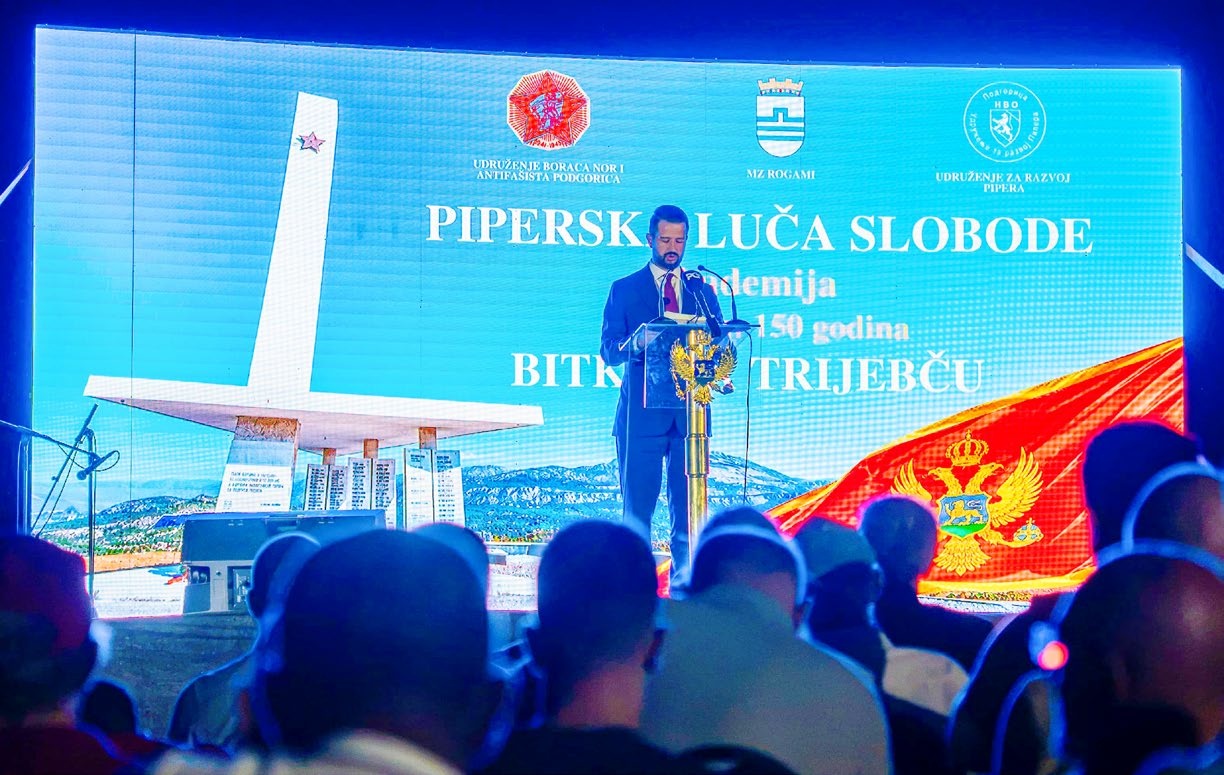
Montenegro has marked 150 years since the battle of Trijebač, one of the set pieces of its national history. The anniversary was marked by the ceremony “Piperska luča slobode” (“The Piperi Beacon of Freedom”), organised by the Podgorica Association of National Liberation War Veterans and Anti-Fascists, the Association for the Development of Piperi, and the Rogami local community. Wreaths were laid at the monument on Trijebač in honour of those who took part in the events of 1876 and those who died in them.
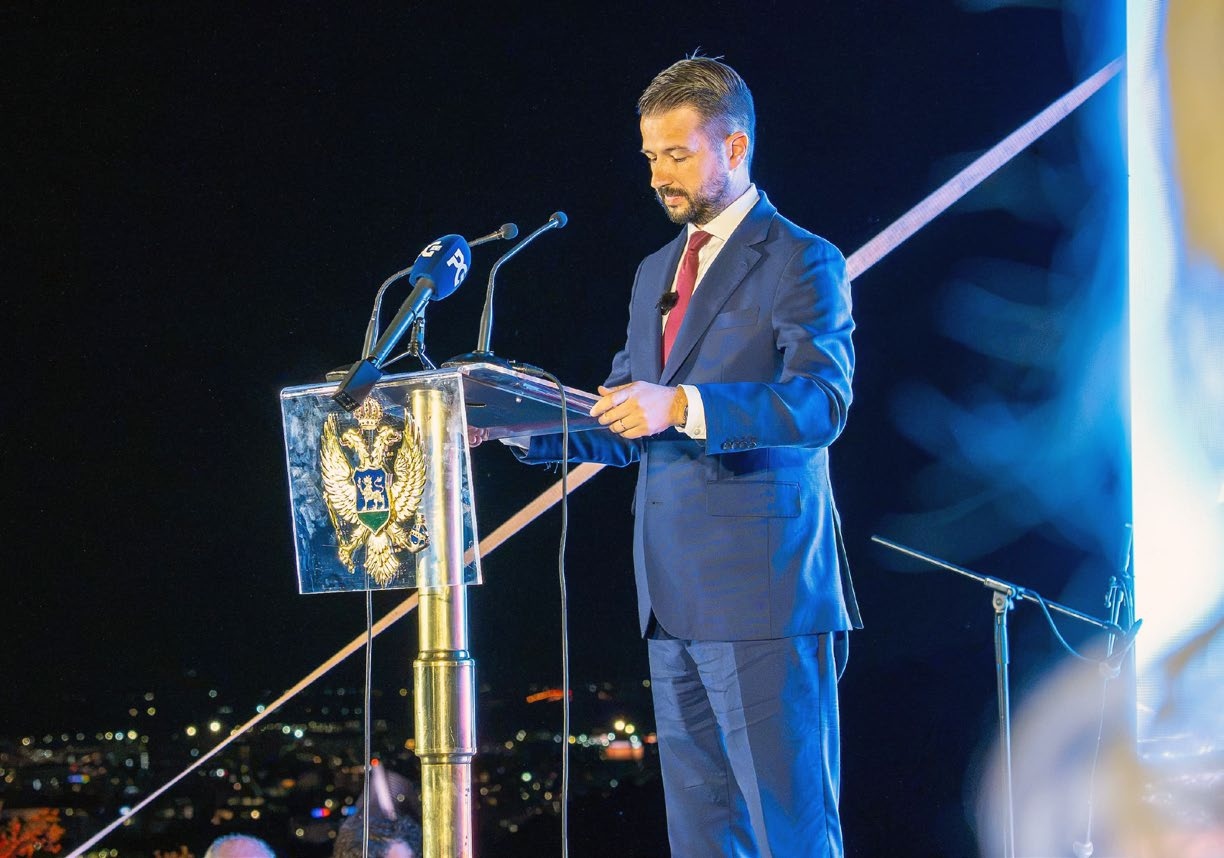
The ceremony was attended by the President of Montenegro, Jakov Milatović, who said that what was defended on Trijebač a century and a half ago was far more than a military position. It was Montenegro’s freedom and future.
A DAY ON THE SOUTHERN GATEWAY TO PIPERI
The battle of Trijebač was fought on 6 September 1876, during the Velji rat, at the southern gateway to Piperi. After Montenegrin victories at Vučji Do and Fundina, Ottoman forces launched a fresh offensive towards Piperi. The Montenegrin army, under the command of Vojvoda Božo Petrović, fought a hard, day-long engagement that ended with the Ottoman forces pushed back towards the Zeta.
The historical record gives a special place to the Montenegrin army trumpeter Božo Vukanović, whose presence of mind at one of the battle’s decisive moments helped shape its outcome. Trijebač has remained a symbol of resistance, of courage, and of the fight for the survival of a community and a state.
“When we remember Trijebač today, we remember above all the people who stood on this hill that September day. People who had their families, their homes and their futures. People whose courage became part of the freedom inherited by the generations who came after them,” Milatović said. The president said that places such as Trijebač, Vučji Do, Fundina, Martinići and Krusi stand as lasting testimony to Montenegro’s history of freedom, and that preserving them is an obligation to the generations still to come.
“A people that forgets the places where it defended its freedom loses part of its own identity. It is our obligation to keep these places in the collective memory, and to pass on to the generations to come the knowledge of how the freedom we live in today was made,” Milatović said.
His message did not leave that heritage in the past. Remembering Trijebač, he said, takes on its full meaning when it becomes a spur to act responsibly in Montenegro today. “To guard the state we inherited. To build institutions that citizens trust. To nurture mutual respect and togetherness. To be responsible towards the country we will one day hand to the generations that come after us,” the president said.
WREATHS FOR THE HEROES OF TRIJEBAČ
Wreaths were laid at the Trijebač monument to mark the 150th anniversary of the battle, in memory of those who fought in it and of all those whose struggle helped preserve Montenegro’s legacy of freedom.
Among the delegations paying their respects was that of the Union of National Liberation War Veterans’ Organisations of Montenegro (SOBNOR), led by its president, Radojica Radojević, with vice-president Aleksandar Maraš and secretary Radmila Čagorović, alongside a delegation of the Podgorica Capital City Association of National Liberation War Veterans 1941-1945 (OBNOR). Radovan Miličković, a member of the managing board of the Podgorica Capital City OBNOR 1941-1945 and a man who makes a point of his Piperi roots, also spoke to mark the anniversary.
“The battle of Trijebač is not just a historical fact we read about in textbooks. It is the living foundation of our identity, of our code of honour, and of the freedom-loving gene that is passed down from one generation to the next in Piperi,” Miličković said. He also recalled the continuity of the Piperi tradition of freedom, noting that the same spirit of resistance reemerged during the 13 July Uprising of 1941.
“As a man of Piperi and as a member of the managing board of OBNOR 1941-1945 of the Capital City, I feel an enormous honour, but also a responsibility to keep the memory of these giants alive. It is our sacred duty to pass these ideals on to the younger generations,” Miličković said.
The commemoration of 150 years since the battle of Trijebač thus joined two eras: the one in which freedom was defended on the battlefield, and the present, in which its legacy is kept through institutions, a culture of remembrance and a sense of responsibility for the future. Trijebač, together with Vučji Do, Fundina, Martinići and Krusi, remains part of the historical landscape through which Montenegro’s struggle for freedom is read.
BATTLE OF TRIJEBAČ
On September 6 th 1876, Montenegrin forces under Vojvoda Božo Petrović repelled an Ottoman offensive at the southern gateway to Piperi. The victory, shaped by the courage of fighters and the decisive action of trumpeter Božo Vukanović, became a lasting symbol of resistance and the survival of Montenegro’s state.
LEGACY
Trijebač stands as both battlefield and beacon – a reminder that freedom won must be remembered, and responsibility carried forward.