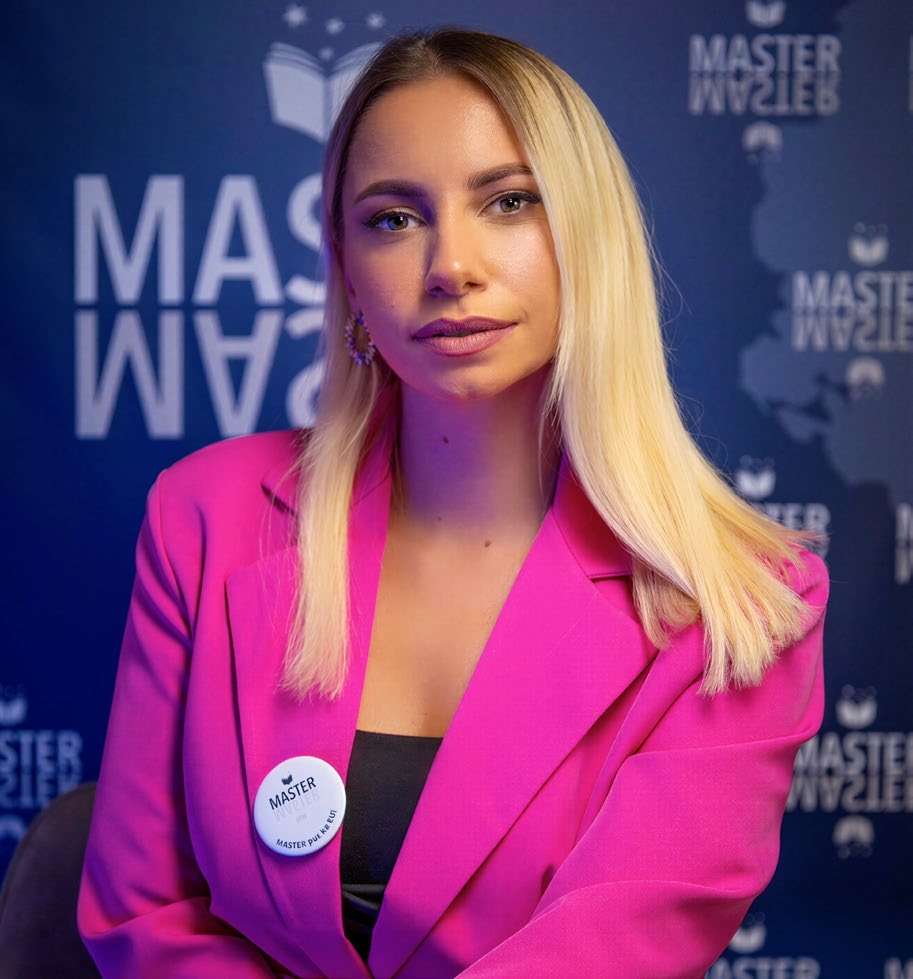
Andrea Popović Milošević, MA, Executive Director of the European Policy Network – MASTER
Can Montenegro transform institutions fast enough for EU entry?
Andrea Popović Milošević, Executive Director of the European Policy Network – MASTER, speaks to Diplomacy Magazine about the final stage of European integration, rule of law reforms, the prospects of EU membership by 2028 and the challenge of ensuring that Montenegro joins the EU as a functional and institutionally strong state.
Montenegro is entering a crucial stage of European integration, in which the momentum of negotiations is increasingly being superseded by the question of the depth of institutional reforms. Andrea Popović Milošević, MA, Executive Director of the European Policy Network – MASTER, discussed with Diplomacy Magazine about how achievable the goal of membership by 2028 is, what further needs to be done and what kind of Montenegro we want to see in the European Union.
Montenegro is considered the leader in European integration in the Western Balkans. How justified is that position today?
That position is justified if we are talking about formal progress in the negotiation process, but it would be misleading to conclude from this that Montenegro has already reached the level of institutional readiness that membership entails. Montenegro has opened all 33 negotiating chapters, 18 of which have so far been provisionally closed, making it objectively the furthest advanced candidate country in the accession process at present. Throughout 2026, the Council of the European Union has also explicitly treated Montenegro as the frontrunner in the enlargement process, and it is additionally significant that, in April, an ad hoc Council working party was established to draft the accession treaty with Montenegro. This shows that the process is now at a qualitatively different stage from where it was a few years ago. However, it is precisely at this stage that it becomes particularly important not to equate progress in the negotiations with the actual institutional transformation of the state. A chapter can be provisionally closed once certain benchmarks have been fulfilled, but membership of the European Union requires institutions capable of applying European rules consistently, equally and without political supervision from Brussels. It is therefore far more important for the reforms to become sufficiently deep-rooted to withstand a change of government, a political crisis or a reduction in external pressure. The European Commission continues to point to the need to strengthen the independence, accountability and efficiency of the judiciary, ensure transparent appointments and reinforce the implementation of the anti-corruption framework, demonstrating that formal progress is not yet synonymous with the work being completed. Montenegro is, therefore, the frontrunner in the negotiation process, but genuine leadership will only be confirmed when the pace at which chapters are closed is matched by an equal depth of institutional transformation.
How realistic is it to expect Montenegro to become a member of the European Union by 2028?
Membership by 2028 is achievable but it would not be realistic to present it as a predetermined conclusion. There is an important distinction to be made between Montenegro being technically prepared to conclude the negotiations and the completion of the entire political and legal process of its accession to the European Union. It is precisely this second dimension that is often underestimated in the domestic public discourse. Under Article 49 of the Treaty on European Union, the Council’s decision on the admission of a new member requires unanimity, with the consent of the European Parliament, while the conditions of admission are set out in an accession treaty between the Member States and the candidate country. That treaty must then be ratified by all contracting states in accordance with their respective constitutional procedures. In other words, Montenegro’s European path does not end with the closure of the final negotiating chapter. At the end of the process, the political and legal green light of all 27 Member States of the European Union is required. This significantly changes the way in which we should talk about 2028. Montenegro can implement reforms, close the remaining chapters and do everything within its power, but it does not control the political dynamics in the 27 Member States, their internal political processes, potential bilateral disputes or their constitutional ratification procedures. Enlargement has never been merely an administrative procedure. It is simultaneously a legal, institutional and distinctly political process. It is therefore important to distinguish between two types of readiness: Montenegro’s readiness for the European Union and the European Union’s readiness to accept Montenegro. The establishment of the Council working party tasked with drafting the accession treaty is a very important political signal, as it shows that the final architecture of the process is already being considered at EU level, but even that does not in itself guarantee a date for membership. In the period ahead, it will therefore not be enough for Podgorica to convince the European Commission alone that it meets the technical criteria. It will be necessary to maintain the political confidence of all Member States, avoid raising bilateral issues that could develop into blockages, and demonstrate that Montenegro’s accession will not result in institutional problems being imported into the Union. At the same time, the EU itself must address questions concerning its own institutional, budgetary and political readiness for further enlargement. Consequently, 2028 should be viewed as an ambitious and potentially achievable political goal, but not as a date that Montenegro can unilaterally guarantee. The closure of the final chapter represents the completion of one part of the process; membership becomes a reality only when it has received the political and legal green light from all 27 Member States.
What are the key reforms that Montenegro must implement for membership to become a reality?
The most demanding reform in the concluding stage will not be the introduction of yet another set of European laws, but rather the depoliticisation of institutions and a change in the way public authority in Montenegro has traditionally been understood and exercised. This is considerably more difficult than legislative alignment, because in practical terms depoliticisation means that political structures must voluntarily relinquish some of the power afforded to them by control over recruitment, appointments, state-owned enterprises, regulatory authorities and the public administration. This is precisely why such reforms can be relatively easily declared, but are much more challenging to implement. A professional public administration cannot exist if a large number of senior officials are replaced with every political change, or if political affiliation, personal connections and informal centres of influence remain more important than professional expertise. An independent regulatory body is not independent simply because the law says so if the way in which its leadership is appointed creates political dependence. The same applies to state-owned enterprises: if they remain a vehicle for party-based appointments and the distribution of political influence, European corporate governance rules will not, in themselves, produce European practices. Reforms of the public administration, the judiciary, the public procurement system, the governance of stateowned enterprises and regulatory institutions should therefore be viewed as interconnected parts of the same problem – the state’s ability to separate the public interest from party-political interests. This is also precisely where the political difficulty of the final stage of accession lies: it is necessary to change not only the rules, but also the system of incentives that has for decades enabled political structures to turn control over institutions into a political resource. At the same time, Montenegro must build the administrative capacity required for membership. Joining the EU does not mean the end of European obligations, but rather a transition to a system in which the state administration participates on a daily basis in the shaping, negotiation, implementation and oversight of European policies. A small administration can be efficient, but only if it is professional, specialised and institutionally stable. If the most capable staff leave, if institutional knowledge is lost after every political change and if professional positions are treated as part of the political spoils, the country may formally become a Member State without having sufficient capacity to take full advantage of its membership.
The rule of law remains one of the greatest challenges. What needs to be done to ensure that changes are substantive rather than merely formal?
In the area of the rule of law, a very clear distinction needs to be made between legislative alignment and results. Over the course of the lengthy negotiation process, Montenegro has developed a substantial legal and strategic framework, but the quality of the rule of law is not determined by the number of laws, strategies and action plans adopted. It is determined by what happens when the law has to be applied to a politically, economically or socially powerful actor. In its latest report, the European Commission insisted, among other things, on merit-based and transparent appointments to senior judicial positions, further strengthening the independence and accountability of the judiciary, more efficient handling of the backlog of cases and the full implementation of the improved legal framework. In the area of corruption, the European Commission continues to assess Montenegro as moderately prepared and points to the need for more comprehensive implementation of reforms. Substantive change must therefore be measurable in terms of results: how efficiently the judiciary handles complex cases, how long proceedings take, whether there are final judgments in high-level corruption cases, how capable the system is of tracing and confiscating the proceeds of crime, how resistant the prosecution service and the judiciary are to political and other undue influence, and whether the law is applied equally regardless of the political or economic power of the person concerned. Selectivity is particularly dangerous. The rule of law does not exist if institutions act decisively towards political opponents but cautiously towards political allies – regardless of which political structure is currently in power.
The independence of institutions must therefore be protected not only from direct political instructions, but also from more sophisticated forms of control: appointment procedures, budgetary dependence, acting appointments, staffing pressure and informal influence. Finally, the real test of European reforms will not come while the accession process is at its peak and there is strong oversight by the European Commission. It will come after membership. Institutions that function only because there is an external condition are not reformed institutions; they are institutions that have learned to respond to conditionality. The goal must be a system that respects the rules even when there is no longer a negotiating chapter to be closed.
To what extent does Montenegro’s European path depend on political will within the country, and to what extent on the European Union itself?
At this stage, the greatest share of responsibility for the quality of reforms must remain with Montenegro. The European Union can set benchmarks, provide financial and expert support, monitor progress and maintain the political prospect of membership, but it cannot depoliticise the public administration, professionalise state-owned enterprises, ensure the independence of the judiciary or establish a culture of political accountability in place of domestic institutions. For too long, European integration has also been used as a political alibi in the countries of the region: when progress is made, it is presented as a domestic achievement, while when the process stalls, responsibility is sought in Brussels, enlargement fatigue or insufficient support from the Member States. Such an approach is no longer sustainable. Montenegro must take a much more critical look at its own weaknesses: partitocratic patterns, political appointments, institutional instability, frequent blockages of appointments, the short-term nature of political decision-making and the fact that European reforms are sometimes prioritised only for as long as they produce an immediate political result. At the same time, the European Union’s responsibility is not negligible. A process defined as merit-based must remain predictable: when a candidate country meets clearly established criteria, there must be a corresponding political response from the Union. Otherwise, the credibility of conditionality is weakened and scope is created for the argument that reforms carry no clear political reward. But here we once again come back to the 27 Member States. The European Commission may issue a positive assessment, but membership is not a decision for the Commission to make. In the final stage, the Member States have the decisive say, unanimity is essential, and the accession treaty must be ratified in accordance with their constitutional procedures. Montenegro must therefore build two types of credibility in parallel: reform credibility with the European institutions and political trust with each Member State. Finally, in the long term, it would be far more valuable for Montenegro to become a Member State whose accession no one can seriously challenge on the grounds of the quality of its institutions than to join as a result of the prevailing geopolitical circumstances with reforms that remain unfinished.
What role do civil society and organisations such as MASTER play in the European integration process?
First and foremost, MASTER brings together a large number of young, well-educated and highly qualified people who envisage their future in Montenegro and who want to contribute towards positive change in the country through their knowledge and work. This is, in fact, at the very heart of what we do. We believe that it is not enough simply to wait for European integration or membership of the European Union to change the society in which we live. If we want a European Montenegro, then we must actively participate in building it. That is why we are present where policies are shaped, but equally where their effects are felt most directly – among citizens, young people and local communities. MASTER representatives are involved in the negotiating working groups for Chapter 22 – Regional Policy and Coordination of Structural Instruments, Chapter 26 – Education and Culture, Chapter 30 – External Relations and Chapter 31 – Foreign, Security and Defence Policy, while through our participation in the Public Administration Reform Council, we contribute to one of the key horizontal reform processes for Montenegro’s readiness for EU membership. In this way, we seek to translate our expertise into a concrete contribution to the institutions and the accession process, while also bringing the experience gained through that process back to citizens. A second dimension, equally important to us, is bringing European integration closer to people. The negotiation process is, by its very nature, highly technical: it involves discussions about benchmarks, the acquis, directives, absorption capacity, institutional frameworks and the provisional closure of chapters. But citizens do not live in a chapter or a directive. They experience the quality of public administration when they are waiting for a document, education policy when they are choosing a school or university, regional policy when they see how evenly different parts of the country are developing, and European rule of law standards when they seek to protect their rights. That is why, through a wide range of projects, analyses, educational programmes, public events and activities, we seek to translate this highly technical process into the language of everyday life and demonstrate that European integration is not a foreign policy issue reserved for the Government, negotiators and Brussels. Among other things, MASTER has carried out activities specifically in the areas of public administration reform and cooperation between institutions and civil society, demonstrating how important it is to link technical reforms with their actual effects on citizens. Young people are a particular focus of our work, because we believe that there is little point in talking about Montenegro’s European future if the generation that is supposed to live that future remains merely a passive observer of the process. Through our programmes and activities, more than 3,000 young people have received training in civic participation, and we see this as one of the most important investments in a European Montenegro. The aim is not to teach young people to uncritically support any institution or policy, but to ensure that they understand how decisions are made, what rights they have, how they can participate in shaping public policies and, above all, how to hold institutions accountable. European integration only becomes fully meaningful when it ceases to be a project of the administration and becomes a societal process. And there can be no societal process without citizens who understand the reforms, ask questions, hold those in power to account and know that their role in a democracy does not end with voting once every four years. That is why we do not see MASTER’s role solely as helping Montenegro achieve membership, but also as contributing to what kind of Montenegro will enter the European Union. For us, membership is not a goal to be administratively ‘ticked off’, but an opportunity to build a country in which young people see a place for their own future, institutions possess knowledge and integrity, and citizens feel that they can influence the decisions made on their behalf. In this process, civil society must have sufficient expertise to engage with institutions on an equal footing, sufficient independence to criticise them when reforms remain only on paper, and a strong enough presence among citizens to bring European policies from negotiation documents into real life. If we reduce European integration to the closure of chapters, we may one day become a Member State of the European Union without our society having truly become European. Our task is to help ensure that this is precisely what does not happen.
How can EU membership affect the position of young people and the issue of their departure from Montenegro?
Membership of the European Union will not in itself solve the problem of young people leaving the country, and it would be irresponsible to create such an expectation. On the contrary, greater freedom of movement and access to a wider labour market, education and professional opportunities may initially make it even easier for young people to leave. A serious youth policy therefore cannot be based on an attempt by the state to ‘retain’ young people through administrative measures or emotional appeals, but rather on creating a society in which leaving is not the result of a sense that professional and life opportunities at home are limited from the outset. For a small country such as Montenegro, youth mobility does not necessarily have to represent a loss if there is a system that encourages circular mobility – enabling young people to study, work and gain experience in other European countries while also giving them genuine reasons to return, start a business, transfer knowledge or collaborate professionally with Montenegro. The problem arises when departure becomes a one-way process because high-quality education, expertise and hard work do not translate into appropriate opportunities at home. Young people will not decide whether to stay based on the number of negotiating chapters that have been closed, but on much more immediate questions: whether they can find a job based on their knowledge and skills, whether they can plan for housing and a family, whether they can start a business without unnecessary administrative barriers, whether there is a high-quality education and research system, whether public services function effectively and whether they trust institutions. The issue of young people should therefore be taken beyond the narrow confines of youth policy. It is simultaneously an issue of the labour market, education, housing, innovation, social policy, the quality of public administration and the rule of law. Young people very quickly recognise the difference between a society in which advancement is based on merit and one in which political and personal connections matter more than competence. EU membership will open up the European labour market to young people, but at the same time it will expose the greatest domestic challenge: if Montenegro cannot compete in terms of knowledge, opportunities and the quality of its institutions, freedom of movement will make it easier for young people to leave rather than give them a reason to return. The question, therefore, is not how to retain young people, but how to build a country they do not have to leave in order to succeed and one that is worth returning to.
What kind of Montenegro would you like to see as a member of the European Union, and what should its place be in the Europe of the future?
Montenegro should join the European Union as a country whose membership is the result of a completed institutional transformation, rather than an instrument through which an attempt is made to bring about that transformation subsequently. Today’s geopolitical context undoubtedly gives enlargement renewed significance, but for a small country it would be particularly risky to be admitted primarily because it is a politically suitable candidate while key institutional weaknesses remain unresolved. Such membership might appear to be a success in the short term, but in the long term it would diminish the country’s ability to exercise the rights and influence the decisions that come with membership. Montenegro’s size need not be a limitation within the European Union. Small states can exercise influence that exceeds their demographic or economic weight when they have a high-quality administration, clear priorities, a professional diplomatic network, credibility and the ability to build coalitions with countries that share their interests. In the European system, influence is rarely based on size alone; it often depends on expertise, policy continuity and a country’s ability to be a reliable partner. Montenegro could have particular credibility in policies concerning the Western Balkans and future enlargements, precisely because it will have first-hand experience of a long and demanding accession process. However, that credibility will exist only if it translates its own experience into institutional knowledge rather than political self-promotion. As a future Member State, Montenegro should advocate the European perspective of the region, while at the same time insisting that enlargement remain based on clear criteria, because lowering the criteria for other countries would also undermine the significance of the reforms that Montenegro itself has had to implement. The most important question, however, is not what kind of Montenegro the European Union will admit, but what kind of Montenegro it will remain after accession. During the negotiations, there is a strong mechanism of external conditionality: Commission reports, benchmarks, negotiating positions and the possibility of a chapter not being closed. Once membership is achieved, this form of transformative pressure weakens. Institutions must therefore be strong enough to function even when Brussels is no longer there to point out each year what has not been done. This should be the very essence of Montenegro’s membership: not the formal achievement of a European goal, but the building of a country that no longer needs European conditionality in order to respect its own laws, safeguard the independence of its institutions, professionalise its public administration and ensure that its citizens are treated equally by the state. Membership should mark the moment when Montenegro raises its own ambitions. Not for young people to leave in order to live a European way of life, but for us to build a European quality of life here; not to use membership as confirmation that our work is done, but as an opportunity to make a much greater leap forward. Montenegro is small enough to change quickly and capable enough to be far more successful than it is today. For me, that is precisely the purpose of membership – for citizens finally to experience the full potential of the beautiful country in which they live.